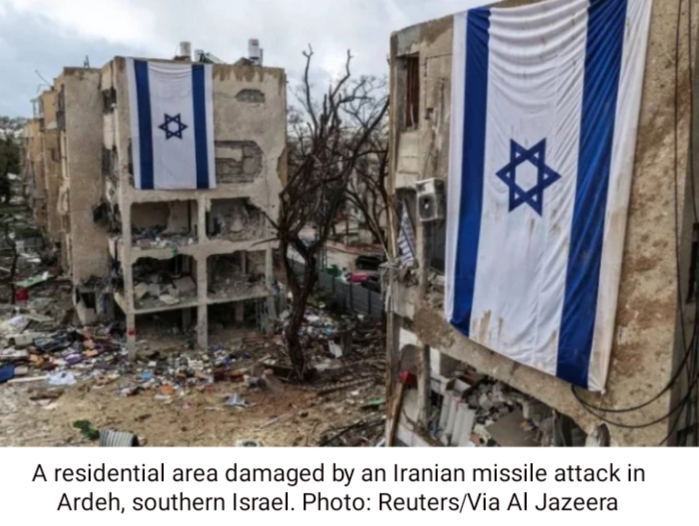
U.S. President Donald Trump believes that Russia’s military support to Iran is not significant but rather limited, stating in a March 13 interview with Fox News that Moscow is “probably helping a little,” while a day later Iranian Foreign Minister Abbas Araghchi described Tehran’s military cooperation with Moscow as “satisfactory,” reinforcing earlier reports that Russia has been sharing satellite and intelligence data about U.S. warships and aircraft positions with Iran; despite Western dominance in military satellite capabilities and Russia’s own reliance on services like Starlink during the Ukraine war, experts suggest that Iran may be receiving valuable intelligence from Russia’s Liana satellite system, designed to track U.S. naval carrier strike groups, as noted by Pavel Luzin of the Jamestown Foundation, while Russia has also played a key role in advancing Iran’s space program including the Khayyam satellite launched in 2022 from Baikonur Cosmodrome, orbiting at around 500 kilometers with near one-meter resolution, allowing potential data sharing and analysis between the two countries; Iran has claimed attacks on U.S. naval assets such as the USS Abraham Lincoln, though such claims were dismissed by the Pentagon, and reports of attacks on U.S. destroyers remain unconfirmed, while Russia continues to supply Iran with air defense systems, aircraft, armored vehicles, and weapons, along with intelligence, expertise, and components according to former Ukrainian General Ihor Romanenko, although no formal mutual defense pact exists and Moscow has avoided direct involvement; at the same time, following the Russian invasion of Ukraine, Iran has supported Russia with ammunition, short-range missiles, firearms, and especially Shahed kamikaze drones, which are low-cost but effective and widely used in Ukraine, prompting Kyiv to develop countermeasures, while Russia has upgraded these drones with improved speed, navigation, AI modules, and systems like the Kometa-B anti-jamming satellite navigation unit, later sharing some advancements back with Iran; Russia has also refined tactics involving simultaneous deployment of real and decoy drones to overwhelm air defenses, a strategy now observed in Iranian operations, with UK Defence Secretary John Healey noting the influence of Vladimir Putin’s strategies behind Iran’s capabilities, though analysts like Nikita Smagin argue that Russia’s support offers only limited benefits, and researcher Nikolai Mitrokhin highlights a decline in Iran’s drone usage from around 250 per day to roughly 50, indicating reduced operational intensity; meanwhile, the conflict has driven global oil prices upward, benefiting Russia economically and strengthening President Vladimir Putin’s ability to sustain the war in Ukraine, even prompting adjustments in U.S. sanctions policy, while analyst Ruslan Suleimanov suggests that Moscow’s support is more symbolic than decisive, aimed at maintaining strategic ties without ensuring Iranian victory, as Tehran itself appears aware of the imbalance of power and is instead pursuing strategies to expand regional tensions and influence global oil markets, ultimately supporting the view that Trump’s assessment of limited Russian assistance is not entirely unfounded.
How extensive is Russia’s military assistance to Iran?