The first drone struck at around 1:30 a.m. Through the hole it created, another drone entered about 60 seconds later—then, “boom.”
Before the incident was fully over, three floors of the U.S. Embassy in Riyadh were severely damaged, and the CIA station inside the building was also shattered.
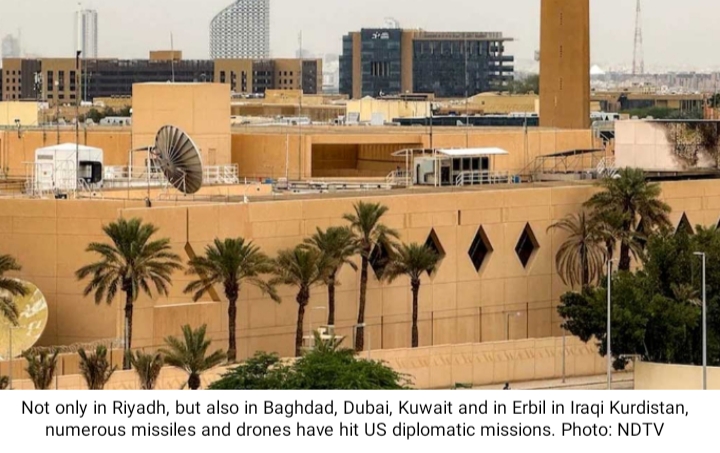
According to media reports, on March 3 an Iranian drone bypassed air defense systems near the diplomatic zone and entered the compound of the U.S. Embassy in Riyadh. About a minute later, another drone followed the same path and exploded inside.
Saudi Arabia’s Ministry of Defense later stated that the attack caused a small fire and only limited damage. However, a report by The Wall Street Journal, citing U.S. officials, presented a different picture.
The U.S.-based outlet reported that the fire burned for nearly half a day and that parts of the embassy suffered damage beyond repair.
The breach of a secured section of the embassy building and the strike on the CIA station are being seen as evidence of Iran’s intelligence capabilities.
Officials said that if the drone had struck during the daytime—when the building was full of personnel—the damage could have been far more severe. The attack likely aimed to send a message that Iran can reach even locations the U.S. once considered secure.
Like most U.S. diplomatic facilities around the world, the U.S. Embassy in Riyadh does not have its own air defense system. Instead, it relies on Saudi Arabia for its security.
The Saudi military provides protection to a nearby palace using a Patriot missile defense system; according to former U.S. Defense Department officials who spoke to The Wall Street Journal, the embassy falls within the coverage area of that system.
On the same night as the drone attack, Iran also allegedly attempted to target the highest-ranking diplomat stationed in Saudi Arabia. The diplomat’s residence is located just a few hundred feet from the embassy.
Since then, Iran has continued to strike multiple locations in Riyadh that were previously considered secure zones. At Prince Sultan Air Base, Tehran’s attack reportedly destroyed several U.S. warplanes and refueling tankers, including an E-3 AWACS radar aircraft, and injured more than a dozen personnel.
Since the war began on February 28, Iran has been carrying out intense and ongoing attacks on U.S. bases and diplomatic missions across the Middle East.
Not only in Riyadh, but U.S. diplomatic missions in Baghdad, Dubai, Kuwait, and Erbil in Iraqi Kurdistan have also been hit by numerous missiles and drones.
However, there have been no confirmed reports of U.S. military fatalities in these attacks.
So far, Washington has acknowledged the deaths of only seven U.S. service members due to Iranian attacks. Meanwhile, multiple U.S. media outlets report that Iran’s counterattacks have destroyed hundreds of millions of dollars’ worth of Pentagon aircraft and defense equipment.
How Iran attacked the CIA station inside the US embassy in Saudi Arabia