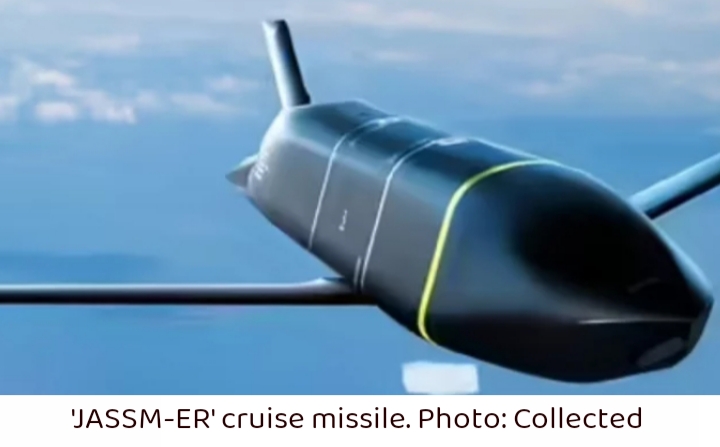
The United States has reportedly decided to deploy nearly its entire stockpile of advanced JASSM-ER cruise missiles in its ongoing military operations against Iran. Even reserves originally allocated for potential conflicts in other regions are now being redirected to support this campaign.
According to reports citing informed sources, missiles from the US Pacific Command’s inventory are being transferred to combat zones under Central Command, as well as to the Fairford airbase in the United Kingdom.
Before the conflict, the United States possessed approximately 2,300 JASSM-ER missiles. Over the past four weeks, more than 1,000 of these have already been used. Under the current situation, only around 425 missiles may remain available for US forces worldwide—an extremely limited reserve. Military analysts estimate that this remaining stock would be sufficient for just a single mission involving up to 17 B-1B bomber aircraft. At the current rate of production, it could take several years to replenish this significant shortfall.
Although the White House claims that a large portion of Iran’s air defense systems has been destroyed, developments on the ground suggest otherwise. Last Friday, a US F-15E fighter jet was reportedly shot down. Following that incident, an A-10 attack aircraft and two rescue helicopters were damaged by Iranian fire. Additionally, since the beginning of the conflict, more than 12 advanced MQ-9 drones have reportedly been destroyed, raising serious questions about claims of full air superiority.
In a recent speech, President Donald Trump issued a strong warning to Iran, stating, “Within the next two to three weeks, we will send them back to the Stone Age.” His remarks have intensified tensions across the Middle East. There is also growing speculation that US Marines and paratrooper units may be planning an operation to seize Iran’s key oil terminal at Kharg Island.
However, as stocks of advanced missiles continue to decline, the United States is increasingly turning to older B-52 bombers equipped with relatively low-cost JDAM bombs as an alternative strike strategy.
Meanwhile, Iran has also escalated its offensive operations. Regional sources report that Iran has already launched around 1,600 ballistic missiles and more than 4,000 Shahed drones. In response, the United States has been rapidly depleting its interceptor missile stockpiles used for air defense.
Although major defense contractors are attempting to increase production, their efforts remain limited compared to the scale and intensity of the conflict. As a result, experts warn that a prolonged war could pose significant challenges to the long-term sustainability of US military capabilities.
US decides to use entire cruise missile stockpile against Iran