A decade ago, China imported about 30 percent of Iran’s total oil production. Today, however, it is purchasing nearly all of it.
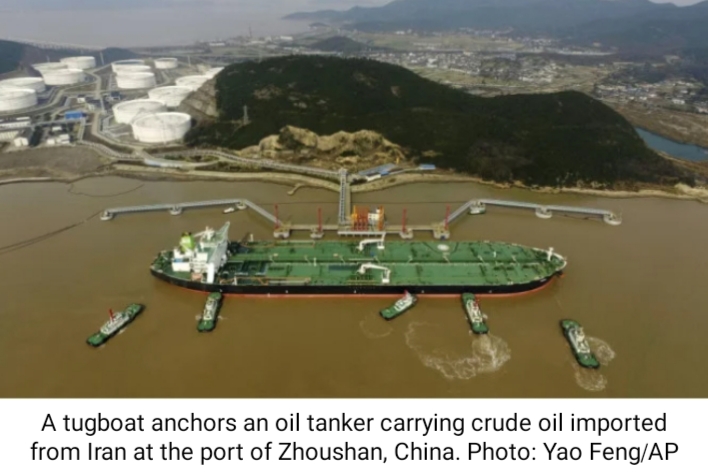
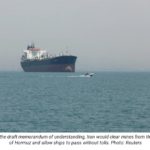
At China’s Zhoushan port, crude oil tankers arriving from Iran are regularly being docked with the assistance of tugboats.
During his first term, Donald Trump implemented a “maximum pressure” policy against Iran, aiming to remove its oil from global markets and cut off Tehran’s primary source of revenue. In reality, however, Iran continues to sell oil worth billions of dollars every month—largely thanks to one key partner: China.
As sanctions intensified, this Asian partner steadily increased its oil purchases from Iran. While China once bought roughly one-third of Iran’s oil output, it now takes in almost the entire supply.
According to U.S. officials and analysts, Chinese buyers, in coordination with Iran, have built one of the world’s most sophisticated sanction-evasion networks. Payments are often processed through smaller Chinese banks with limited international exposure, reducing their vulnerability to U.S. sanctions and making enforcement more difficult.
Iranian-established front companies in places like Hong Kong play a crucial role in facilitating these financial transactions.
Although China’s major state-owned energy firms stepped back to avoid direct confrontation with Washington, smaller independent refineries—known as “teapots”—have emerged as the primary buyers of Iranian crude. These transactions are often concealed through falsified documents and misrepresentation of oil origins.
Experts from the Washington-based think tank Foundation for Defense of Democracies, including analyst Max Meizlish, argue that China is Iran’s principal partner in circumventing sanctions. Without China’s long-term support, Iran would struggle to sustain its current geopolitical posture.
China’s Foreign Ministry has stated that it opposes unilateral and “unjustified” sanctions, emphasizing its commitment to safeguarding national energy security. At the same time, Beijing remains cautious to avoid being directly identified as violating sanctions.
Despite these concerns, China continues importing Iranian oil due to its growing energy demands and the advantage of discounted prices, complicating U.S. strategic objectives in the Middle East.
While the United States has imposed sanctions on various individuals and entities involved in this trade, it faces limitations in directly targeting China, as doing so could disrupt global oil markets and strain bilateral relations.
Even after regional tensions escalated, this network has remained operational. Although Tehran has exerted control over the strategically vital Strait of Hormuz and threatened Western shipping, Iranian tankers continue to make regular voyages to Chinese ports.
Official Chinese customs data shows no recorded imports of Iranian crude since 2023. However, according to analytics firm Kpler, China imported an average of 1.4 million barrels per day of Iranian oil in 2025, accounting for a significant portion of Iran’s total exports.
Before the “maximum pressure” campaign began in 2017, China imported around 650,000 barrels per day—meaning current levels have more than doubled.
Maximum Pressure
In earlier years, when sanctions were less restrictive, Chinese state-owned companies openly purchased Iranian oil. Following the 2015 nuclear agreement, countries such as India, Italy, and Greece also increased their imports.
However, after the Trump administration withdrew from the deal and reinstated strict sanctions, the landscape shifted dramatically. Iran’s oil exports dropped from approximately 2.8 million barrels per day in 2018 to just 200,000 by 2019.
With China’s support, Iran quickly adapted by creating alternative mechanisms. Companies such as Sahara Thunder and Sepehr Energy were used to disguise the origin of oil shipments through falsified documentation.
Shadow Fleet and Covert Shipping
A key component of this trade is the so-called “shadow fleet.” Tankers frequently change names, disable tracking systems, and conduct ship-to-ship transfers at sea to conceal the origin of the oil.
According to research by C4ADS, a China-linked network of at least 56 vessels has transported hundreds of millions of barrels of sanctioned oil.
Role of “Teapot” Refineries
China’s independent “teapot” refineries have become major buyers of Iranian crude. By transacting in yuan instead of U.S. dollars, they significantly reduce exposure to sanctions.
Flow of Funds
To facilitate payments, smaller Chinese financial institutions are utilized. One notable example is Bank of Kunlun, which plays a key role in processing transactions linked to Iran.
Complex Transaction Mechanisms
U.S. investigations indicate that this trade involves front companies, falsified ship identities, and offshore oil transfers.
In some cases, payments are not made in cash. Instead, barter arrangements are used, with Chinese firms providing infrastructure projects in exchange for oil.
According to reports, such arrangements accounted for approximately $8.4 billion in transactions in 2024.
How China is helping Iran deal with sanctions and pay for the war