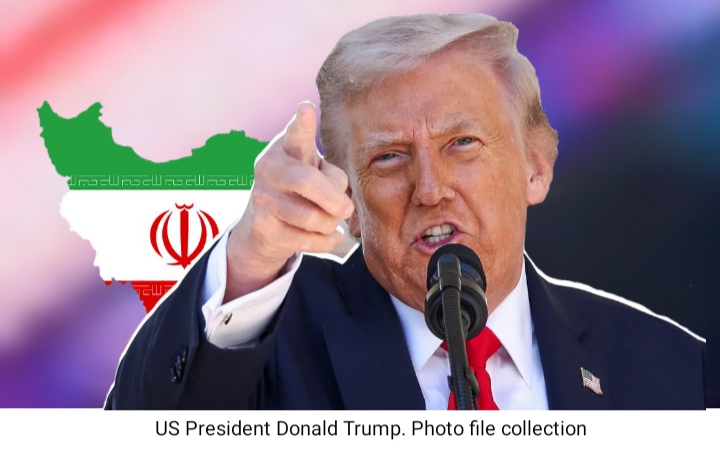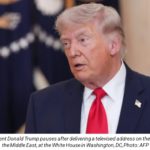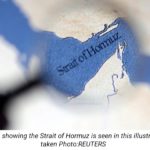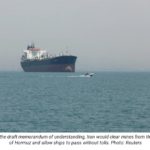
Pakistan has sent a plan to the United States and Iran aimed at stopping the ongoing war in the Middle East and reopening the strategically vital Strait of Hormuz for energy transportation; however, U.S. President Donald Trump has described the proposal as “not good enough,” stating that Iran could be wiped out in a single night and suggesting that Tuesday night could be that moment, while Tehran has made it clear that it does not want a temporary ceasefire but a complete end to the war and that the Strait of Hormuz will not be reopened anytime soon. This development comes as Trump’s deadline—set to expire at 8 PM U.S. local time (6 AM Wednesday in Bangladesh)—approaches; he had previously warned that if no deal is reached and the Strait remains closed, “hell will break loose” in Iran, with potential strikes on power plants and bridges. Iran has been engaged in intense diplomatic efforts for several days to halt the war, as the conflict has triggered widespread global economic instability, and with the Strait of Hormuz effectively closed, oil prices have surged, reaching $110 per barrel as of yesterday; meanwhile, the 38th day of the war saw heavy retaliatory strikes, increasing casualties and destruction. According to a source cited by Reuters, Pakistan’s plan consists of two phases: the first calls for an immediate ceasefire along with the reopening of the Strait of Hormuz, and the second envisions a final agreement within 15 to 20 days, referred to as the “Islamabad Agreement”; the proposal was reportedly sent to both sides on Sunday night. The source added that Pakistan’s Army Chief, Field Marshal Asim Munir, held overnight communications with U.S. Vice President JD Vance, Special Envoy Steve Witkoff, and Iranian Foreign Minister Abbas Araghchi, although Pakistan’s Foreign Ministry spokesperson Tahir Andrabi declined to comment. Earlier, U.S. outlet Axios reported similar discussions, citing mediators who said that a two-phase agreement was under consideration, beginning with a possible 45-day ceasefire followed by negotiations for a permanent end to the war. Iran has consistently opposed reopening the Strait of Hormuz; Tehran recently stated that while the passage might be conditionally opened for others, it would remain permanently closed to the United States and Israel, and an Iranian official told Reuters that they would not reopen the Strait as part of any ceasefire nor accept any timeline for an agreement. Tehran has also rejected the idea of an initial ceasefire, arguing that such a pause would allow “enemies” to regroup, with Foreign Ministry spokesperson Esmail Baghaei emphasizing the need for a complete end to the war to prevent its recurrence, citing past bitter experiences in negotiations with the United States. Despite earlier pushing for a deal due to internal pressure and lack of full support from Western allies, Trump reiterated at a White House event that while the proposal is significant, it is still not sufficient; later, during a press conference on Iran, he again warned that U.S. forces could “obliterate” Iran in a single night, possibly as soon as Tuesday. He also described the rescue of U.S. pilots from a downed aircraft in Iran as “historic,” while Defense Secretary Pete Hegseth stated that Monday would see the heaviest strikes on Iran since the war began on February 28, followed by even more intense attacks on Tuesday, though similar threats had been made before. Even before these warnings, the 38th day of the war witnessed massive retaliatory attacks, with Iranian strikes causing significant damage in Haifa in northern Israel and killing four people, while at least 28 locations in central Israel, including Tel Aviv, were targeted, and reports also emerged of attacks involving Lebanon, Saudi Arabia, Bahrain, and Iraq. On the same day, the United States and Israel carried out a bombing at Sharif University of Technology in Tehran, and strikes were also reported on a petrochemical facility in Asaluyeh; in Tehran’s Baharestan area, 15 people were killed, and the head of intelligence of Iran’s Islamic Revolutionary Guard Corps, Seyed Majid Khademi, was also reported killed. According to the Human Rights Activists News Agency (HRNA), more than 3,500 people have been killed in Iran since the start of the war, and amid the escalating violence, an Iranian youth told the BBC, “It feels like we are sinking into quicksand; what can ordinary people do? We cannot stop Trump.”
Donald Trump threatens to wipe out Iran overnight, Tehran adamant