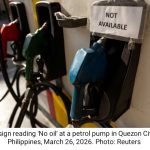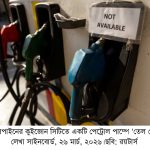
The ongoing instability in the Middle East has begun to disrupt the normal global fuel supply chain, raising concerns about a potential energy shortage across Bangladesh, prompting the government to increasingly focus on alternative and diversified import sources. A significant portion of the world’s oil trade—nearly one-fifth—passes through the Strait of Hormuz, which remains under Iran’s strong influence, making the import of crude oil and liquefied natural gas (LNG) from the region more challenging and risky. Taking this into account, Bangladesh has requested the United States to grant a waiver or exemption from sanctions to allow the purchase of refined fuel from Russia without triggering adverse reactions or legal complications, while at the same time continuing discussions with countries across Asia, Africa, and other regions to broaden its energy supply base. According to the Ministry of Power, Energy and Mineral Resources, a formal letter was sent to Washington on March 22 seeking permission to import up to 600,000 tons of refined fuel from Russia or alternatively requesting a temporary sanctions relief for at least two months. At a briefing held at the Secretariat on Monday, ministry spokesperson Monir Hossain Chowdhury stated that discussions had already taken place with the U.S. State Department and that the formal application was submitted based on their guidance, with Bangladesh now awaiting a response. Officials, however, have not disclosed detailed procurement strategies, particularly whether the fuel would be sourced directly from Russia or routed through a third country. Meanwhile, Bangladesh is also working to secure additional fuel supplies from regional partners. Under an existing agreement, India had committed to supplying approximately 60,000 tons of diesel between January and June, but prior to the escalation of tensions in the Middle East, Bangladesh had received only about 5,000 tons. Subsequent high-level communications at the ministerial and secretary levels helped secure additional shipments, and so far around 22,000 tons of diesel have been imported from India through both the India-Bangladesh pipeline and maritime routes. At the same time, two more shipments from Indonesia are expected, each carrying around 6,000 tons of fuel. As part of its diversification strategy, Bangladesh is also engaging with countries such as Singapore, Malaysia, Nigeria, Azerbaijan, Kazakhstan, Angola, Australia, and the United States regarding potential fuel and gas supplies, with officials confirming positive responses in several cases, including confirmed LNG shipments from Angola and Australia. Bangladesh has also reached out to Iran to explore shipping arrangements, though logistical and security concerns remain unresolved. According to the ministry spokesperson, navigation through the Strait of Hormuz is currently highly risky, especially for vessels not flying the Bangladeshi flag, which may face potential restrictions. While Iran has hinted that Bangladeshi vessels might be permitted to pass, Dhaka is still awaiting formal confirmation. Officials noted that several alternative routes have been assessed, but many are not economically viable. One such proposal involved transporting fuel via a 150-kilometer pipeline to Yanbu in Saudi Arabia, but high port charges, transit fees, and handling costs would significantly increase overall import expenses. Authorities emphasized that any procurement decision must ultimately remain cost-effective. The search for new suppliers has also become more difficult due to rising global oil prices and additional surcharges imposed by some exporting countries. Despite these uncertainties, officials have assured that Bangladesh’s short-term fuel supply remains stable. Recent and upcoming shipments are expected to bring in a total of 54,600 tons of diesel, while an additional 7,000 tons is anticipated from India’s Numaligarh refinery in April. Additional imports from Malaysian suppliers are also expected, which could push total diesel imports for April beyond 100,000 tons. Currently, Bangladesh holds a stock of approximately 1.37 million tons of diesel, which is sufficient to manage the situation in the short term, although officials caution that supply conditions for May and June remain uncertain. The government has urged the public not to panic, assuring that near-term fuel needs are being managed effectively. To regulate fuel distribution and prevent hoarding, the government is preparing to introduce a QR code-based digital “fuel pass” system, under which each registered vehicle will receive a unique code allowing it to purchase a limited amount of fuel within a specified period, with the system automatically preventing repeated purchases within the same cycle; motorcycles are also expected to be included under this system. The platform will digitally record vehicle registration details, purchase time, and fuel quantity to enable close monitoring by authorities, and to minimize administrative complications, the passes may be centrally issued and distributed through filling stations. The agricultural sector is being given top priority in fuel allocation, particularly considering the ongoing irrigation season, with diesel distribution coordinated through lists prepared by local agricultural officers to ensure farmers receive adequate supply. Officials confirmed that no district has reported diesel shortages affecting irrigation so far. Additionally, the government is considering several conservation measures, including extending weekly holidays, promoting remote work, and continuing online classes. Globally, fuel prices have surged in several countries including Nepal, Bhutan, Pakistan, Afghanistan, the Maldives, and Sri Lanka, with increases exceeding 25 percent in some cases, while the Philippines has already declared an energy emergency and fuel reserves in Cuba are reportedly nearing critical levels. In comparison, Bangladesh’s overall energy management remains relatively stable, with diesel accounting for about 63 percent of total consumption and its supply chain still functioning without major disruption. However, authorities have identified octane supply and distribution as a growing concern, even though it represents a relatively small share of total fuel demand.
Global pressure on energy supply, Bangladesh is changing strategy