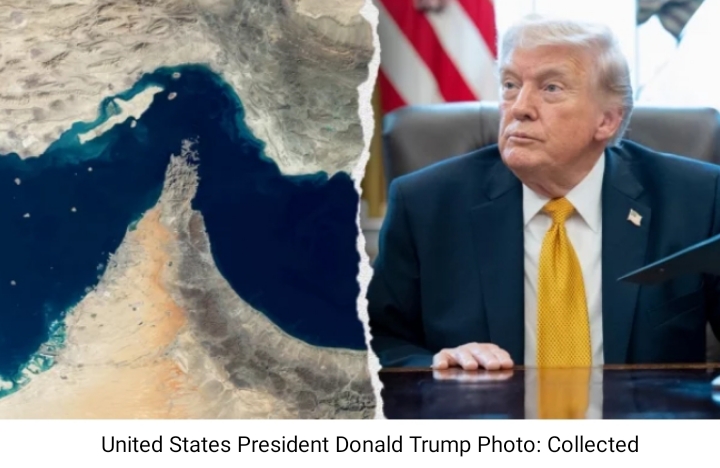
U.S. President Donald Trump has reportedly told his close advisers that he is inclined to end the ongoing military campaign against Iran, even though the strategically vital Hormuz Strait has not yet been fully reopened.
According to international media reports citing senior administration officials, Trump believes that prolonging the conflict could extend the war beyond his preferred timeline. His potential decision could allow Tehran to maintain a degree of control over the waterway for a longer period, making any future effort to fully reopen it more complex and risky.
Recent internal assessments suggest that the United States has already achieved its primary military objectives—significantly weakening Iran’s naval capabilities and reducing its missile stockpiles. Based on this evaluation, Trump and his advisers are now leaning toward de-escalation rather than further military escalation.
From Washington, D.C.’s perspective, the focus is shifting toward diplomatic pressure instead of direct military action. The administration aims to use coordinated international efforts to push Tehran into ensuring the free flow of commercial shipping through the strait.
Officials indicate that if diplomatic efforts fail, the responsibility for securing and reopening the waterway could be transferred to U.S. allies, particularly European and Gulf nations. Trump is reportedly keen on having allied forces take the lead in such operations to avoid entangling the United States in a prolonged conflict.
Although the White House still retains multiple military options, its immediate priority appears to be ending the war and reducing regional tensions. This evolving strategy reflects Trump’s intention to quickly restore political and economic stability.
Overall, this more flexible approach could reshape geopolitical dynamics in the Middle East. The Hormuz Strait is a critical global energy corridor, and any disruption to its operations poses serious risks to the world economy. However, Trump’s strategy of rapidly concluding the conflict may generate mixed reactions among allies—especially those heavily reliant on the security of this vital shipping route.
For now, the international community is closely watching whether the United States will scale back its military operations without a formal agreement with Tehran, and how the situation ultimately unfolds.
Trump wants to stop war even if Iran doesn’t open Strait of Hormuz