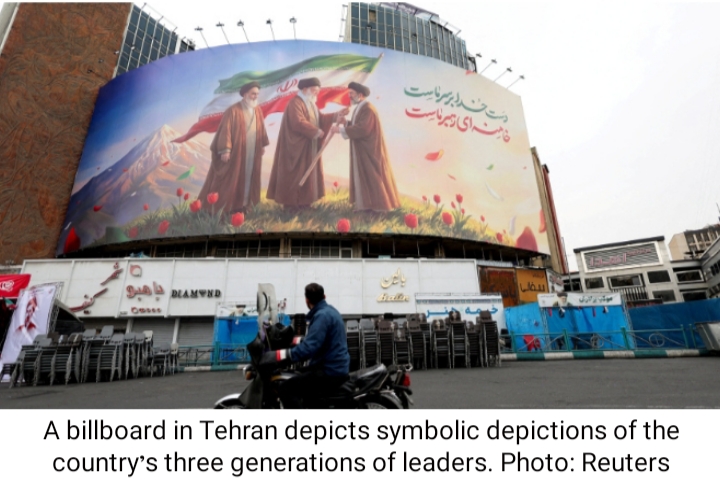
Nearly two decades ago, Iran’s so-called “secret” nuclear program came to the attention of the international community, although Tehran has consistently insisted that its nuclear activities are exclusively for peaceful purposes, including electricity generation and scientific research, and that it has no plans to develop nuclear weapons; at that time, the country’s Supreme Leader Ayatollah Ali Khamenei issued a fatwa explicitly forbidding the production of nuclear weapons, but recent joint attacks by Israel and the United States resulted in Khamenei’s death along with key family members and top military and political leaders, dramatically altering the situation and raising the possibility that hardline and extremist factions within Iran may now consider revoking the fatwa, while public opinion is also gradually shifting in the same direction, especially as the country has previously endured attacks and international scrutiny over its nuclear program; international analyst Trita Parsi has stated that the nuclear fatwa is effectively no longer operational and that the views of Iran’s elite and general public regarding nuclear weapons have changed significantly, which was not the case before, as Iran had long pursued a “strategic patience” approach, advancing its uranium enrichment step by step without directly moving toward weaponization, and in recent years the country possesses more than 400 kilograms of highly enriched uranium, enough to potentially produce multiple nuclear bombs, according to experts; following Khamenei’s death, his son Mojtaba Khamenei assumed leadership but has not publicly provided clear guidance on nuclear policy, creating uncertainty about the future strategy, while reports of political and military friction have emerged between President Masoud Pezeshkian and Revolutionary Guard Commander Ahmad Vahidi over power sharing and decision-making authority, further complicating Iran’s internal political landscape; analysts suggest that recent Israeli-American attacks and international pressure leave Iran with limited options to ensure its security, increasing the likelihood that the country may pursue nuclear weapons, as Kim Jong Un recently claimed that nuclear weapons are the only means to keep a state safe from external attacks, and Iran’s experience reinforces the idea that a nation with nuclear capabilities will cause adversaries to think twice before striking; experts note that Iran’s nuclear capability and weaponization potential depend on three main factors: the possible revocation of Khamenei’s fatwa, access to sufficient enriched uranium, and the necessary technical and infrastructural capacity, much of which Iran already possesses, meaning it could relatively easily produce a functional nuclear explosion, which, even if not deliverable via long-range missiles to strike the U.S. or other established powers, could be used politically to demonstrate power and deter potential aggressors; furthermore, analysts warn that Iran’s nuclear weapons development could trigger a regional arms race, as Saudi Arabia is also prepared to follow suit, potentially destabilizing the regional balance of power and security, and overall, Iran’s leadership may now feel it has nothing to lose by pursuing nuclear weapons, having already endured sanctions, threats of attacks, and international pressure, allowing Tehran to assert with confidence to the United States and Israel that “we are doing this to defend ourselves, and we have no alternative,” marking a new chapter in Iran’s strategic approach and national security posture.
World on brink of turning point in Iran’s nuclear policy: New strategy, new reality after Khamenei’s death