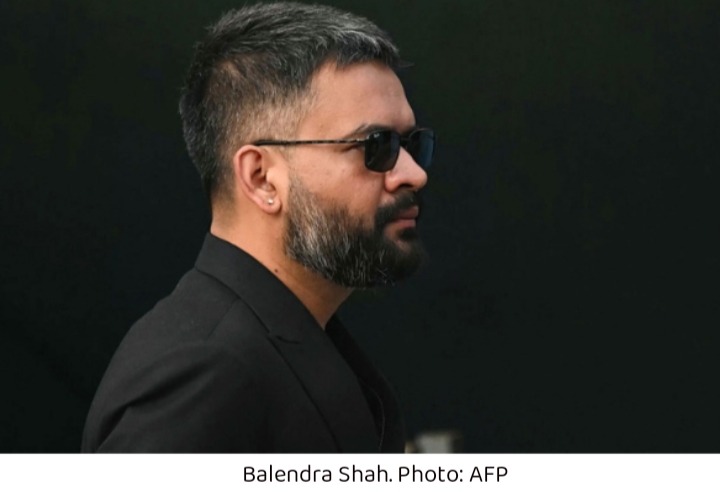
Balendra Shah has been sworn in as Nepal’s 47th Prime Minister, following his appointment by President Ramchandra Paudel.
On Friday afternoon, during the ceremony, Shah wore fitted trousers and a jacket, complemented by a black Nepali topi and sunglasses. The event took place at the President’s residence and was attended by domestic and foreign diplomats as well as senior government officials.
Balendra Shah now faces the challenge of steering Nepal through years of political instability and economic difficulties. In the March 5 elections, his party, the Rastriya Swatantra Party (RSP), won a majority in the 275-member parliament with 182 seats. This was Nepal’s first general election since the anti-corruption Jan G movement in September last year, which claimed 76 lives.
At 35 years old, the former mayor of Kathmandu is the youngest Prime Minister in Nepal’s recent history. Shah is also the first leader from the Madhesi community to lead the country, a group primarily residing in Nepal’s southern plains near the Indian border.
Political analyst Puranjan Acharya stated that the new government’s first test will be delivering transparent and timely services to the public. Citizens expect to see initial signs of good governance from next Sunday.
Acharya also noted that one of Shah’s immediate challenges will be implementing the investigation report on the violence that occurred during the anti-corruption protests. The report recommended bringing to justice those responsible, including former Prime Minister KP Sharma Oli.
Unemployment and widespread corruption were the primary reasons behind the large youth protests. One-fifth of Nepal’s population lives in extreme poverty, with around 1,500 people leaving the country daily in search of work.
Prolonged political instability has posed a challenge for Nepal, situated between the two Asian powers, India and China. Since 1990, Nepal has seen 32 governments come to power, but none have completed their full five-year term.
Nepal’s ‘rapper’ Prime Minister Balendra takes oath