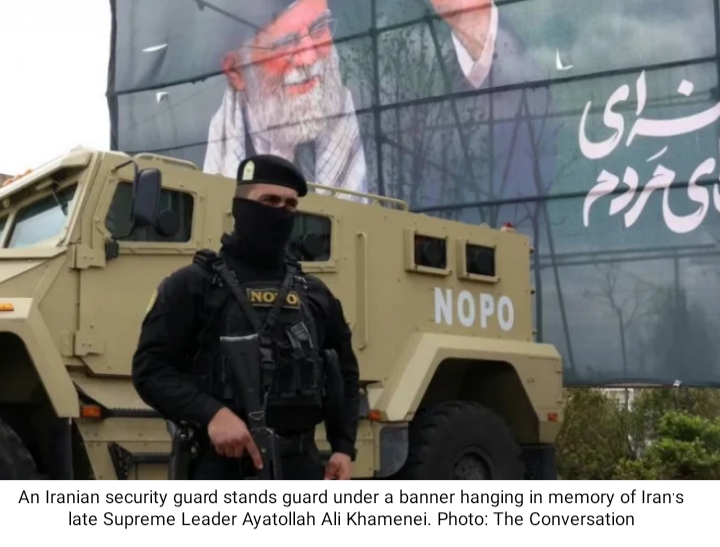
About a month ago, when Donald Trump and Benjamin Netanyahu initiated military actions against Iran, it is now widely believed that they did not fully understand Tehran’s political structure or its defensive capabilities. Although both the United States and Israel have claimed various military successes since the start of the conflict, they have yet to clearly explain their ultimate objectives, what they aim to achieve, or how they intend to bring the war to an end.
Iran’s strong resistance has drawn the Middle East into a prolonged and uncertain conflict. Early assumptions suggested that intense military pressure would quickly force Iran into submission, but reality has proven otherwise. Tehran responded with far greater preparedness than anticipated, launching retaliatory strikes targeting US bases across the Persian Gulf and inflicting notable damage on Israel.
There is also the looming possibility of Iran partially or fully shutting down the Strait of Hormuz, a move that could severely disrupt global oil and gas supplies and send shockwaves through the world economy. Relying heavily on their military superiority, the US and Israel appeared to believe that dominance in air and naval power would quickly overpower Iran. They also assumed that internal unrest would erupt within Iran, with citizens rising against their government—an expectation that has not materialized.
As the prospect of a swift military victory fades, the Trump Administration is increasingly likely to shift toward a diplomatic resolution. Similarly, pressure is mounting on Netanyahu to consider the same path.
Why Iran Has Proven So Resilient
Before the war began, Iran was facing internal unrest and international criticism, particularly over its handling of public protests. At the same time, regional allies such as Hamas and Hezbollah had been weakened, and developments in Syria following the fall of Bashar al-Assad created additional challenges for Tehran.
Despite deep mistrust toward Washington, Iran had shown willingness to re-engage in negotiations over its nuclear program, with mediation efforts reportedly making progress. However, once the conflict began, Tehran found an opportunity to demonstrate its resilience and strategic depth.
Iran’s governing system is designed to endure even under extreme pressure. Its political and military structures are built in a way that allows continuity even if senior leaders or commanders are eliminated. This resilience has been demonstrated in past crises, including the Iran-Iraq War.
The survival of Iran’s system is rooted in a combination of ideological commitment, pragmatic flexibility, and a powerful security and intelligence apparatus. While segments of the population may oppose the government, many Iranians remain united in defending their country’s sovereignty and cultural identity against foreign intervention.
A War of Endurance and Strategy
Iran understands that it cannot match the United States or Israel in conventional military strength. As a result, it has adopted an asymmetric warfare doctrine often referred to as “mosaic defense,” relying on decentralized command structures and smaller operational units to sustain prolonged resistance.
Under this strategy, Iran has targeted US positions in the Persian Gulf region using drones and missile systems, while ensuring leadership continuity through a flexible chain of command.
Additionally, support from Russia and China is believed to have strengthened Iran’s position through technological cooperation, energy trade, and intelligence sharing. Meanwhile, regional allies such as Hezbollah and Houthis have already begun engaging in the conflict, further expanding its scope.
Overall, the war has evolved into a prolonged struggle of endurance, where survival and resilience have become more important than achieving rapid victory.
The Only Way Forward: Diplomacy
It remains unclear how long this conflict will continue. However, it is increasingly evident that a purely military solution is unlikely. Iran shows no signs of backing down, while the United States and Israel appear divided on their long-term objectives.
Given the rising costs of war, domestic political pressures, and global economic concerns, the Trump administration may eventually be compelled to pursue a diplomatic agreement—particularly concerning Iran’s nuclear program and the reopening of the Strait of Hormuz.
On the other hand, Netanyahu continues to maintain a hardline stance, seeking to weaken or dismantle Iran’s current political system. Yet, the reality on the ground suggests that negotiations remain the only viable path to ending the conflict.
According to many analysts, regardless of how the war concludes, Iran has already managed to strengthen its strategic position.
Author Note (Rewritten):
This analysis is inspired by the perspectives of Amin Saikal, a professor of political science at the Australian National University and a specialist in Middle Eastern and Islamic studies. His book Iran Rising: The Survival and Future of the Islamic Republic offers an in-depth examination of Iran’s resilience and future trajectory.
Trump underestimated Iran’s ability to survive, now it’s his responsibility to get out