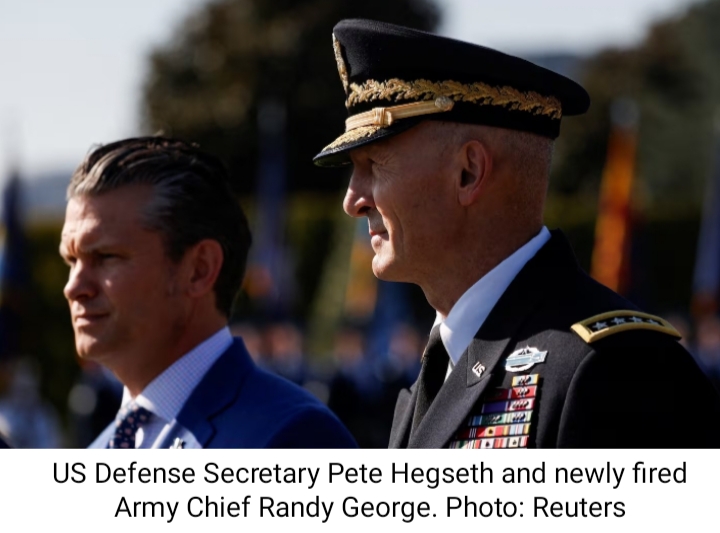
Amid rising tensions with Iran, the United States has introduced a significant change in its military leadership. Defense Secretary Pete Hegseth asked Army Chief Randy George to step down, and his retirement was implemented shortly afterward. The move has sparked widespread discussion across international media.
According to analysts, such a decision during an ongoing conflict is highly unusual. Typically, maintaining stability in leadership is considered essential during major military situations. From that perspective, this step signals a potential shift in U.S. military policy.
The Pentagon has not provided a detailed explanation for the decision. It has only stated that General George has retired with immediate effect. The silence from senior officials has further fueled speculation.
Various international reports have outlined several possible reasons behind the move. One key factor may be policy disagreements. It is believed that differences existed between the defense secretary and military leadership regarding war strategy, operational priorities, and overall direction—particularly in handling Iran-related actions.
Another possible reason is political and strategic alignment. Analysts suggest that the administration may be aiming to build a military leadership that is fully in sync with its policies and priorities. This could involve bringing in officials who are more aligned and loyal to the administration’s vision.
Additionally, the move may be part of a broader restructuring within the Pentagon. Reports indicate that several other senior military officials have also been reassigned or replaced around the same time. Since the new administration took office, there has been a noticeable trend of reshuffling top positions, pointing toward a reorganization of the military structure.
Some observers believe that the need for faster and more decisive leadership during the current crisis may have also played a role. The administration may view a more aggressive and responsive approach as necessary in the ongoing conflict.
However, such decisions are not without risks. Changing leadership in the middle of a conflict can affect internal coordination within the military. It may lead to delays or confusion in executing plans, and could also raise concerns about morale and continuity of command.
International observers warn that such changes could also create unease among U.S. allies, as they may signal strategic uncertainty during a critical time.
From the administration’s perspective, however, this is seen as a necessary strategic adjustment aimed at improving effectiveness in dealing with the current situation.
Overall, the departure of Randy George is not merely an individual resignation; rather, it reflects a potentially significant shift in U.S. military leadership, policy direction, and approach to managing the conflict.
Why the big change in US military leadership in the midst of the Iran war?