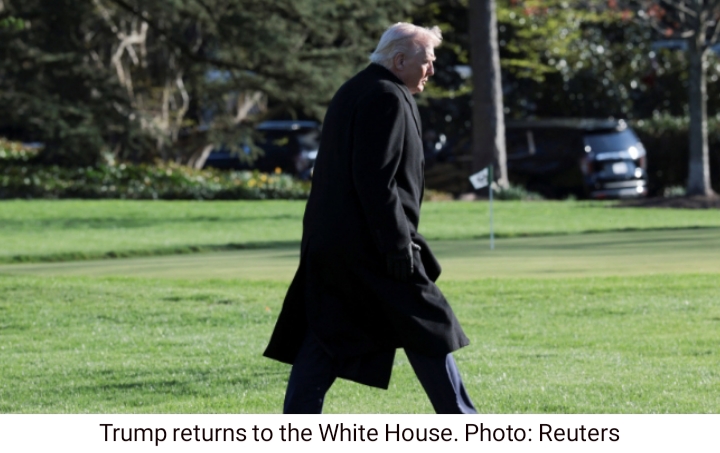
**If the Strait of Hormuz was not opened for all, U.S. President Donald Trump had issued a “final warning” to destroy Iran’s power infrastructure, even setting a 48-hour deadline for Tehran. However, before that deadline expired—on March 24—Trump delivered what many described as a “message of hope” to the world. In a surprising move that stunned both allies and adversaries, he announced an additional five-day window for Iran. This sudden pause in escalation immediately sparked widespread analysis across international media. Experts debated why Trump appeared to step back and what strategic calculations led to this temporary halt. A dominant view among analysts is that Iran’s counter-threat—targeting electricity grids and water desalination facilities in neighboring Arab states—significantly altered the situation. The same Trump who had vowed to “destroy everything” in Iran to secure the Strait of Hormuz was now proposing joint security arrangements with Tehran to safeguard it.
After World War II, the two superpowers—the United States and the former Soviet Union—entered a prolonged geopolitical rivalry known as the Cold War, marked by an intense arms race. Although the Soviet Union collapsed in 1991, fears of a third world war have persisted. For decades, experts have warned that future conflicts may center not on oil, but on water. In 1995, Egyptian economist Ismail Serageldin famously stated that while the 20th century witnessed wars over oil, the next century could see wars over water unless global perspectives change. Earlier, former UN Secretary-General Boutros Boutros-Ghali predicted that the next Middle Eastern conflict would be driven by water scarcity rather than politics. Similar concerns were later echoed by Ban Ki-moon and strategic analyst Brahma Chellaney. Over the past four decades, the possibility of water becoming a trigger for major global conflict has remained a serious concern.
On March 22, during the 23rd day of the ongoing Iran conflict, Agence France-Presse reported that water is increasingly being viewed as a critical and vulnerable target in modern warfare. Amid peace talks in Geneva, the United States and Israel reportedly launched a sudden joint strike on Iran on February 28, with claims that senior leadership figures, including Supreme Leader Ali Khamenei, were targeted. Despite continued strikes on major Iranian cities, Tehran responded by launching retaliatory actions against Israeli and U.S. positions, as well as facilities in allied Arab nations.
The Middle East, despite its vast oil and gas wealth, remains one of the most water-scarce regions in the world. Countries such as the UAE, Saudi Arabia, Oman, Kuwait, Qatar, and Bahrain depend heavily on desalination plants to meet their freshwater needs. According to research cited by Nature, nearly 42% of the world’s desalination capacity is located in this region. Water expert Esther Crauser-Delbourg warned that without desalinated water, life in the Middle East would become unsustainable. Analysts believe Iran’s threats to target these facilities effectively shifted the strategic balance, forcing a reconsideration of escalation by Washington.
Reports have already emerged of alleged attacks on water infrastructure. Bahrain accused Iran of launching a drone strike on one of its desalination plants, though damage was reportedly minimal. Meanwhile, Iran claimed that a U.S. strike hit its own facility on Qeshm Island. The Central Intelligence Agency had previously warned that disruptions to water infrastructure in the Middle East could trigger catastrophic humanitarian consequences. British outlet The Guardian highlighted that many of these facilities are located along the Persian Gulf coastline, making them highly vulnerable to attack.
Experts warn that targeting such infrastructure could collapse water supplies, halt industries, and cripple the oil and gas sector—leading to severe global economic repercussions. In this context, many believe that Iran’s “water weapon” strategy may have played a decisive role in compelling Trump to temporarily step back and announce a five-day pause. However, according to Reuters, Iran’s Foreign Ministry suggests that this delay is itself part of a broader U.S. war strategy. The question remains: has the threat of water warfare truly reshaped the course of this conflict?**
Did Trump back down after Iran’s threat to use ‘water weapons’?