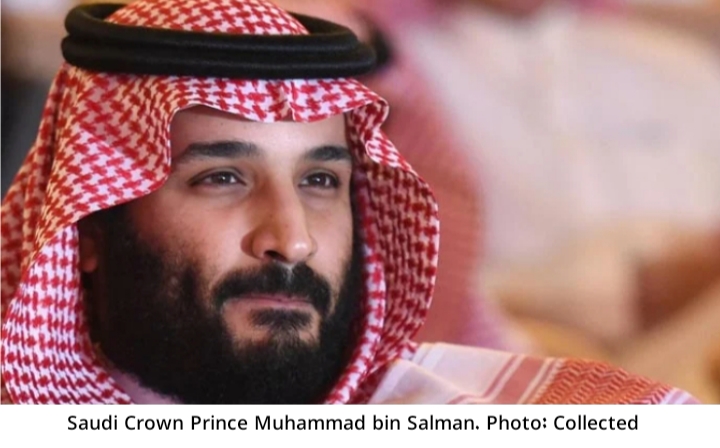
During the Cold War, Western countries sought Saudi Arabia’s support to counter the influence of the Soviet Union, and as a result, the global spread of Wahhabi ideology began through Saudi funding—this was stated by Mohammed bin Salman in an interview with a major international newspaper on March 22, the final day of his visit to the United States; in the nearly 75-minute discussion, he explained that at the time, Saudi Arabia’s Western allies were actively working to prevent Muslim countries from falling under Soviet influence, and for that reason, in the 1970s they requested Saudi Arabia to assist by promoting religious institutions abroad, leading to large-scale financial support for mosques and madrasas across various regions and the expansion of Wahhabi thought; historically, this ideology originated in the 18th century in the Najd region of Arabia through Muhammad ibn Abd al-Wahhab, who was influenced by Ibn Taymiyyah and emphasized a strict religious framework closely tied to governance; following the collapse of the Dissolution of the Ottoman Empire after World War I, the Saudi state was established with Western backing, and an alliance formed between the ruling family and Wahhabi scholars, allowing the ideology to spread further under state patronage; reports suggest that from the 1970s onward, billions of dollars were spent over several decades, with allegations that a portion of these funds reached extremist groups; in 2013, the European Parliament labeled Wahhabism as a source of global terrorism, highlighting a contrast between past strategic policies and present concerns; the Crown Prince also noted that the funding, which initially began under government direction, later moved beyond direct state control and continued through various foundations and private entities; after World War II, the world became divided between two major power blocs, and with the collapse of the Soviet Union in the 1990s, the Cold War came to an end, but in the following years, militant groups emerged in parts of the Middle East and beyond, many of which are believed to have been influenced by this ideology; addressing another controversy, he denied media claims that he had undue influence over White House advisor Jared Kushner, stating that his relationship with Donald Trump’s administration was based on normal diplomatic interactions, although he acknowledged having a friendly relationship with Kushner that did not involve any improper exchange of confidential information; he also mentioned maintaining cordial relations with other American officials; regarding the Yemen war, he rejected accusations against the Saudi-led coalition over civilian casualties, asserting that efforts had been made to improve humanitarian conditions whenever possible; he further remarked that situations are not simply about good or bad options, but rather about navigating difficult realities; it was also noted that the interview was initially off the record, and only selected portions were later approved for publication by the Saudi embassy, offering insight into the complex interplay of Cold War strategy, ideological influence, and ongoing global security challenges.
Saudi Crown Prince accuses Washington Post of promoting Wahhabism at the request of the West