If former U.S. President Donald Trump ends the ongoing war with Iran without a formal agreement, analysts warn that it could significantly reshape the Middle East’s energy supply system, potentially strengthening Tehran’s strategic position while leaving Gulf Arab oil and gas producers facing consequences they are unprepared for.
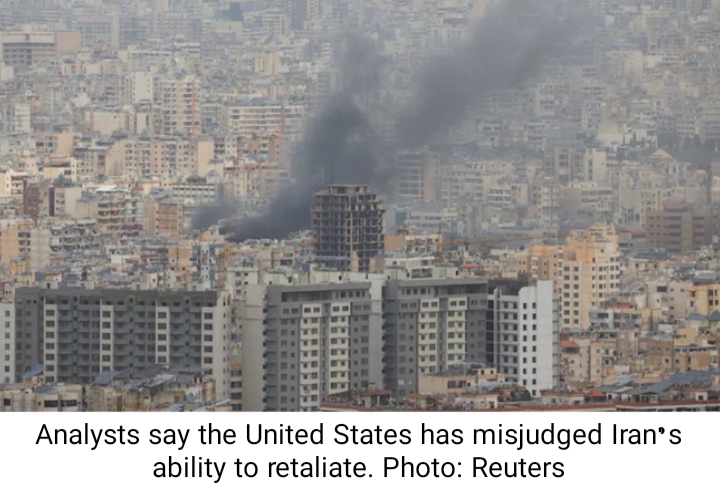
According to analysts, instead of weakening Iran’s Islamic system, the conflict may ultimately make it stronger. If Tehran withstands sustained attacks from the United States and Israel, it could adopt a more aggressive stance and escalate tensions across the Gulf region. In particular, any disruption to the Strait of Hormuz—one of the world’s most critical energy transit routes—could trigger major instability in global energy markets.
In an interview, Trump suggested that the United States could end the war very quickly, even without a negotiated settlement. However, experts caution that ending the conflict without clear future plans or security guarantees could pose serious risks for Gulf countries.
Dubai-based research director Mohammad Baharoon stated, “The core problem is a ceasefire without real outcomes.” He emphasized that even if Washington halts military operations, it does not guarantee that Iran will do the same—especially as long as U.S. forces remain deployed in the region.
He further warned that any restriction on freedom of navigation in the Gulf would be a major concern. Iran’s demonstrated ability to disrupt energy flows sends a clear message to potential adversaries, suggesting they should think carefully before considering any future attack.
Political analysts also argue that the United States and Israel misjudged Iran’s likely response to unprecedented strikes on its leadership. The killing of Supreme Leader Ali Khamenei at the early stage of the conflict marked a turning point, fundamentally reshaping the nature of the confrontation.
He was succeeded by Mojtaba Khamenei, and rather than collapsing the system, the attempt to dismantle Iran’s ruling structure appears to have intensified calls for resistance and retaliation within the country.
Middle East expert Fawaz Gerges noted that the conflict has gone beyond geopolitics and evolved into a broader religious and civilizational struggle, elevating Khamenei from a controversial leader to a symbol of resistance.
Analysts further point out that expectations of regime collapse failed to take into account Iran’s complex political system, which includes multiple institutional layers, parallel power structures, and a long history of resilience. Instead of surrender, these factors are driving stronger resistance and a more defiant Iran.
Additionally, observers believe Washington underestimated Iran’s capacity for asymmetric warfare. Tehran’s strategy is not necessarily to win conventional battles but to apply sustained pressure—particularly through control over energy resources and strategic waterways like the Strait of Hormuz.
Overall, experts warn that without a clear and effective resolution, ending the conflict could ultimately empower Iran and push the broader Middle East toward prolonged instability.
A war to break Iran could make the country stronger