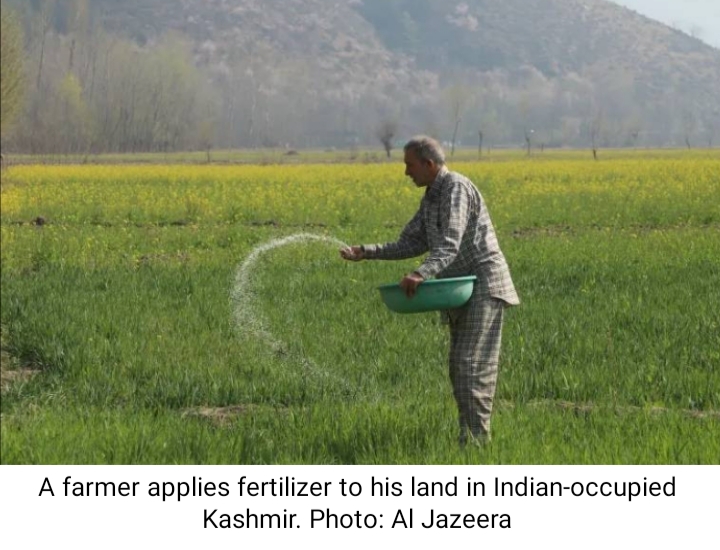
The Middle East is burning with conflict, yet its direct impact is being felt thousands of miles away in South Asia’s agricultural sector; disruptions in energy supply and instability in fertilizer markets have pushed millions of farmers in India, Pakistan, Bangladesh, and Nepal into fresh uncertainty; in Punjab’s Gurdaspur district in India, 42-year-old farmer Ramesh Kumar is spending an anxious season worrying about his crops, standing in his wheat field trying to balance rising fertilizer costs, production expenses, market prices, his children’s education, and family needs; he says everything now depends on the harvest, and if costs continue to rise, he may have to cut back somewhere—perhaps delaying his daughter’s marriage or even putting his children’s education at risk; fertilizer, once a routine and easily available input, has now become difficult to obtain on time even at higher prices, and for Kumar it is not just about cost but about the difference between stability and crisis; his elder son Amit’s school fees are due soon, and he has been saving for his younger daughter Barsha’s future marriage, which is already difficult even in better times, but if the harvest fails, deciding priorities becomes even harder; this uncertainty is not limited to India, as a silent wave of concern is spreading across South Asia’s agricultural sector, where for many farmers the war involving Iran, the United States, and Israel—despite being thousands of kilometers away—is no longer distant geopolitics but something that directly affects household decisions; at the center of this crisis lies the Strait of Hormuz, a critical maritime chokepoint between Iran and Oman through which Gulf countries export most of their energy; nearly one-fifth of the world’s oil and liquefied natural gas (LNG) passes through this narrow corridor, and following recent attacks and escalating tensions, disruptions in this route have severely affected energy supplies, which in turn impacts fertilizer production because LNG is a key component in nitrogen-based fertilizers; rising transportation costs and uncertainty in fertilizer delivery have increased the risk of lower agricultural output, potentially driving up food prices in the future; in South Asia, food security for nearly two billion people depends heavily on fertilizer-based agriculture, with about 46 percent of India’s workforce engaged in farming, around 38 percent in Pakistan, roughly 40 percent in Bangladesh, and more than 60 percent in Nepal; India imports a significant amount of fertilizer each year, about 30 to 35 percent of which depends on the Strait of Hormuz, particularly phosphates, potash, and gas, while its agricultural sector, valued at around $400 billion, supports more than half of the population; in Pakistan, agriculture contributes about 20 percent to GDP, with 20 to 25 percent of fertilizers—especially DAP—imported through this route, and reliance on natural gas for urea production means that disruptions in Gulf gas supplies are driving up local prices; in Bangladesh, agriculture contributes roughly 12 to 13 percent to GDP, with 25 to 30 percent of imported fertilizers coming through this corridor, directly affecting millions of small farmers; in Nepal, agriculture accounts for about 24 percent of GDP, and nearly all fertilizers are imported, with a large share coming via India from the Gulf region; on the ground, the impact is already visible, as farmers in Kashmir’s Pampore report that fertilizer prices rise first when war news spreads, followed by supply shortages, forcing many to reduce usage and risk lower yields; in Pakistan’s southern Punjab, farmers say rising fertilizer costs add to their existing burdens of debt and expenses; in Bangladesh’s Rangpur region, farmers complain that fertilizer is sometimes unavailable and even when it is available, prices are higher; in Nepal’s Gulmi district, farmers report that delays in fertilizer supply damage crops, while higher prices force them to use less; governments are taking steps to manage the situation, with India claiming it has sufficient stock and is exploring alternative import sources, Bangladesh planning to import around 500,000 tons of urea while seeking new suppliers, and Nepal advising farmers to use organic fertilizers while monitoring the situation, yet a lack of confidence persists among farmers at the field level; experts warn that even minor disruptions in fertilizer supply can reduce agricultural output and directly affect food prices, creating significant social and economic pressure in a region where a large share of income is spent on food; for farmers like Ramesh Kumar, this crisis is not just economic but deeply personal, as managing household expenses, children’s education, and marriage plans has become increasingly uncertain, and as he puts it, for some this may be just another war, but for them it is a struggle to keep their families afloat.
Al Jazeera report: The impact of war thousands of miles away on South Asian agriculture