Pakistan has announced a significant increase in fuel prices, a move widely seen as a consequence of rising global energy costs and the ongoing conflict in the Middle East. Speaking at a press conference, Petroleum Minister Ali Parvez Malik stated that although the government tried to provide maximum relief to the public, the current realities have made the decision unavoidable.
He explained that budgetary constraints, along with no clear signs of the war ending soon, have made fuel price adjustments necessary.
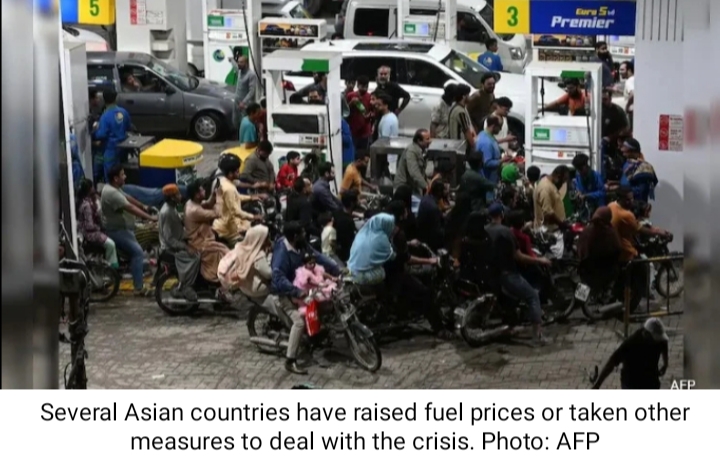
According to the official announcement, petrol prices have been raised by approximately 42.7 percent, while diesel prices have increased by around 54.9 percent. The new price of petrol has been set at 458.40 Pakistani rupees per liter (about $1.64), effective from Friday. Meanwhile, diesel will now cost 520.35 rupees per liter (approximately $1.86).
The minister emphasized that diesel is particularly important for working-class citizens and public transportation, meaning the price hike will directly impact everyday life.
The ongoing conflict in the Middle East has been identified as a major factor behind the increase. Since the outbreak of hostilities on February 28, the region has experienced significant instability. Iranian retaliatory strikes have reportedly damaged various facilities across the Gulf, while maritime traffic through the Strait of Hormuz has been severely disrupted.
Roughly one-fifth of the world’s energy supply passes through this critical waterway, and its disruption has had a major impact on global markets. Pakistan, which relies heavily on oil and gas imports from the Middle East, has been particularly affected.
It is worth noting that Pakistan had already increased fuel prices by about 20 percent on March 6 following the outbreak of the conflict. In addition, the government has introduced several austerity measures to conserve energy, including a four-day workweek for many government offices, extended school closures, and a shift toward online classes.
The crisis is not limited to Pakistan. Several Asian countries have either raised fuel prices or taken similar measures in response to the situation. In Bangladesh, prices of liquefied petroleum gas (LPG) for cooking and compressed natural gas (CNG) for vehicles have recently increased by around 29 percent.
Meanwhile, the International Monetary Fund has warned that vulnerable economies like Pakistan are facing mounting pressure not only from high energy prices but also from supply disruptions.
In a statement, the IMF noted that regions across the Middle East, Africa, Asia-Pacific, and Latin America are already experiencing additional strain due to rising food and fertilizer costs, along with tighter financial conditions.
Petrol prices increase by 43% and diesel prices by 55% in Pakistan due to Iran war